Squash is played by two players (or four in doubles) on an enclosed four-walled court. Players take turns hitting a small rubber ball against the front wall, trying to make the ball bounce twice before the opponent can return it.

The scoring has some quirks — especially if you're coming from tennis — but it's not difficult once you know the two systems in use.
Rallies, points, games, and matches
A rally is a sequence of shots starting from the serve until someone fails to return correctly. The player who wins the rally scores a point. Win enough points and you win the game; win enough games and you win the match.
Most matches are the best of 5 games.
The two scoring systems
There are two main systems in squash. Which one you encounter depends on the level and context of play.
Traditional hand-in-hand-out scoring
In this older system, only the server can score. Win a rally as the server and you get a point. Win a rally as the receiver and you take the serve — but no point yet.
Games go to 9 points. At 8–8, the player who got to 8 first chooses whether to play to 9 or 10.
Point-a-rally scoring
The modern system used in most competitive play. A point is scored on every rally regardless of who's serving. Games go to 11 points, with a 2-point margin required to win. So games can run past 11 if it stays close.
Serving
At the start of each game and after each point, a player serves. In singles, the server can serve from either service box but must alternate boxes when winning consecutive points. In doubles, players serve in turn from alternating boxes.
The squash court
A standard squash court is an enclosed rectangle with four walls. The front wall is where all shots must land — above the tin (bottom boundary) and below the outline (top boundary).
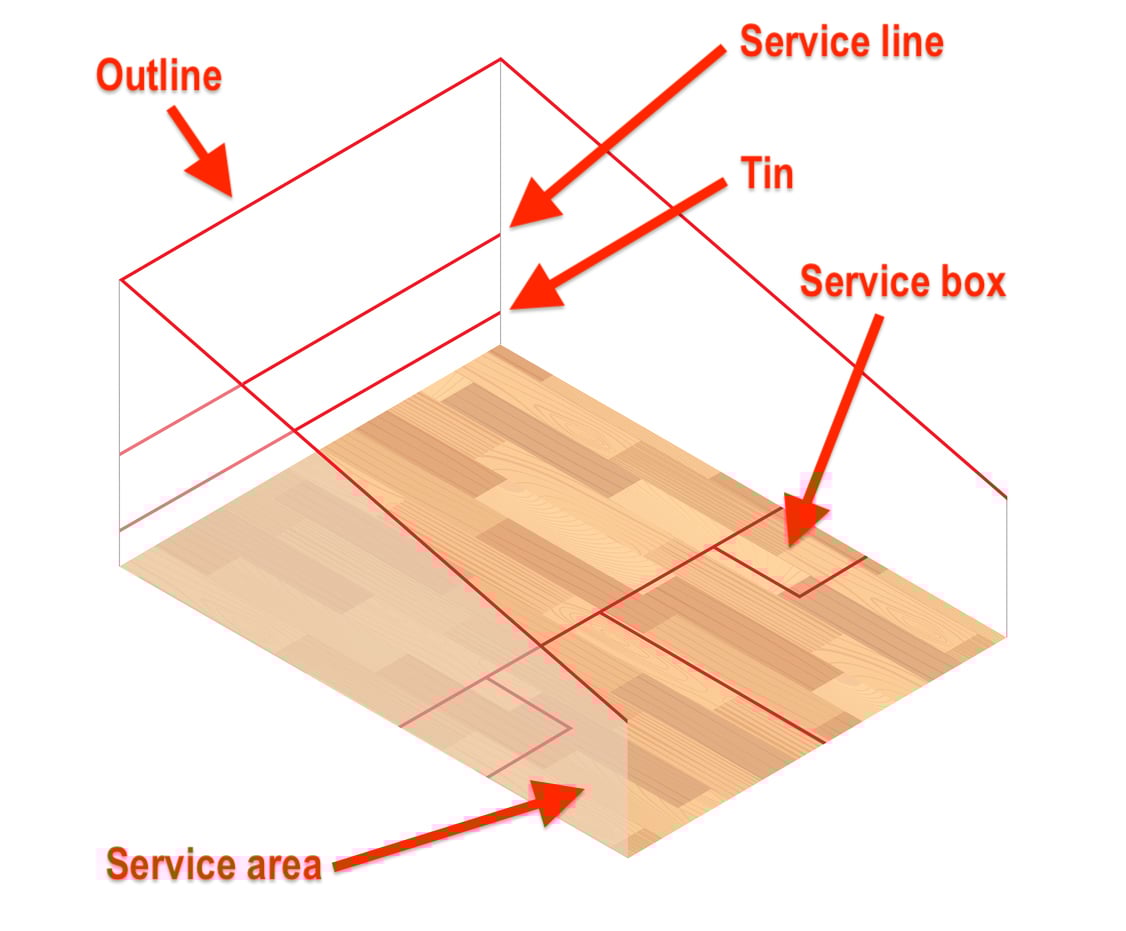
Key court dimensions:
- Court length: 9.75 meters (32 feet)
- Court width: 6.4 meters (21 feet)
- Front wall height to Outline: 4.57 meters (15 feet)
- Back wall minimum height to Board: 2.13 meters (7 feet)
The lines that matter
The Tin is the bottom boundary on the front wall. Hit below it and you lose the rally. The Board is the equivalent boundary on the back wall. The Outline runs along the top of the front and side walls — above it is out. The Service Line on the front wall marks the minimum height for a valid serve.
The Half Court Line divides the court from the back wall forward to the service line, determining where the receiver must stand.
Courts are typically wood floors with hard plaster, concrete, or glass walls. Glass-walled courts are common in professional play since spectators can watch from all sides.
What's shown on a squash scoreboard?
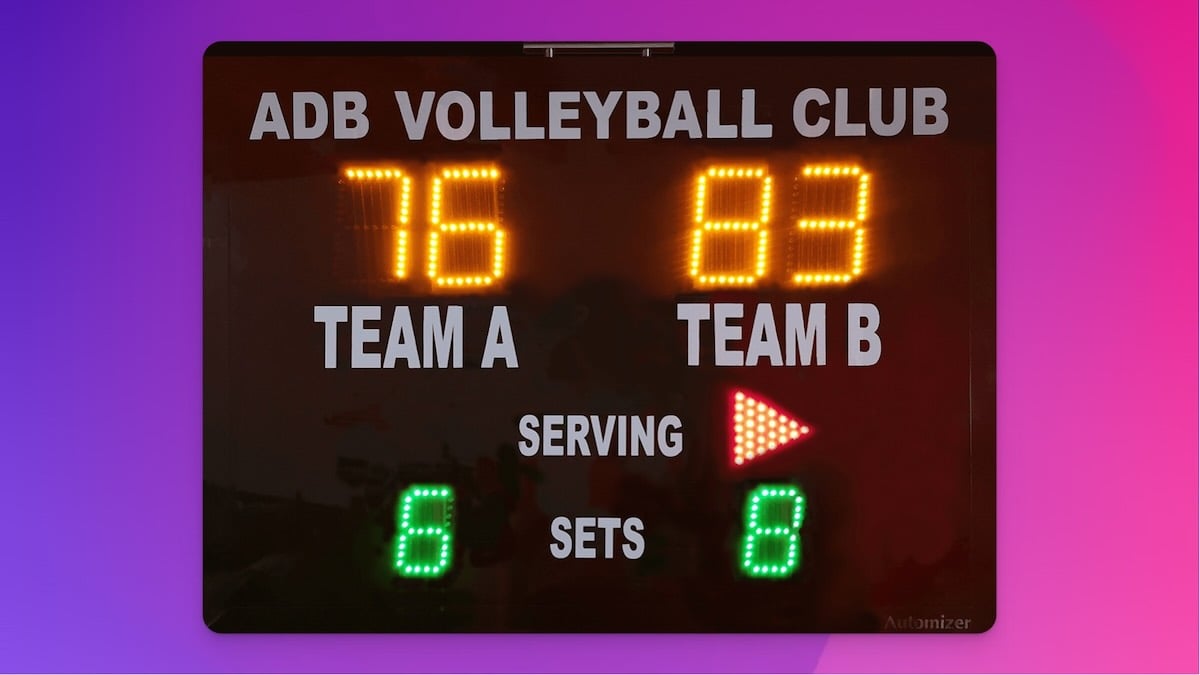
A typical squash scoreboard shows:
- Player or team names
- Points scored in the current game
- Games won by each player
- Who is currently serving
Using scoreboard software for squash
Pairing software with a TV or projector is the practical choice for amateur leagues on a budget.
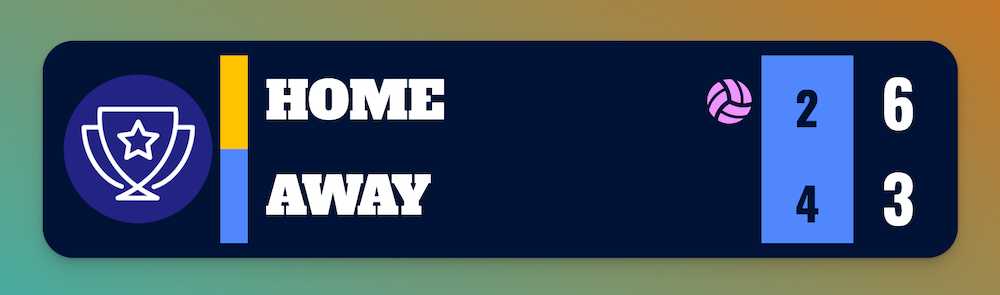
Keepthescore.com has a dedicated online squash scoreboard. Setup takes under 30 seconds, and you can control it from your phone anywhere in the venue.
Do you have feedback or questions? Please do comment below!